
People always ask me what it’s like running the LA Punk Museum. The truth is there is no museum building. There never was. Punk was never about sitting quietly behind glass. Punk is movement. Punk is community. Punk is showing up. Punk is carrying history in a cardboard box to a gallery, a club, a university, or somebody’s living room and sharing it with whoever walks through the door.
The last month has been a perfect example of that.
I’ve been bouncing between archives, galleries, universities, television projects, concerts, museum planning, and enough coffee meetings to keep a small city awake. One day I’m discussing the future of Punk School, the next I’m digging through forty-year-old flyers, and by nightfall I’m singing Kurt Weill songs and talking about the first wave of Los Angeles punk rock.
The LA Punk Museum continues its strange and wonderful life as a nomadic institution. We pop up wherever we’re invited. Galleries. Universities. Cultural centers. Record stores. Wherever people want to talk about punk history. The museum was founded on the idea that culture belongs to the people who made it, and every year more people seem interested in preserving these stories before they disappear.
I’ve also been spending time working on Punk School, a project that has grown far beyond a book. What started as a collection of memories is becoming a curriculum, a workbook, an archive, and a challenge to the idea that education only happens in classrooms. Punk taught many of us how to think for ourselves, build communities, create art, publish our own media, and survive. That’s an education worth preserving.
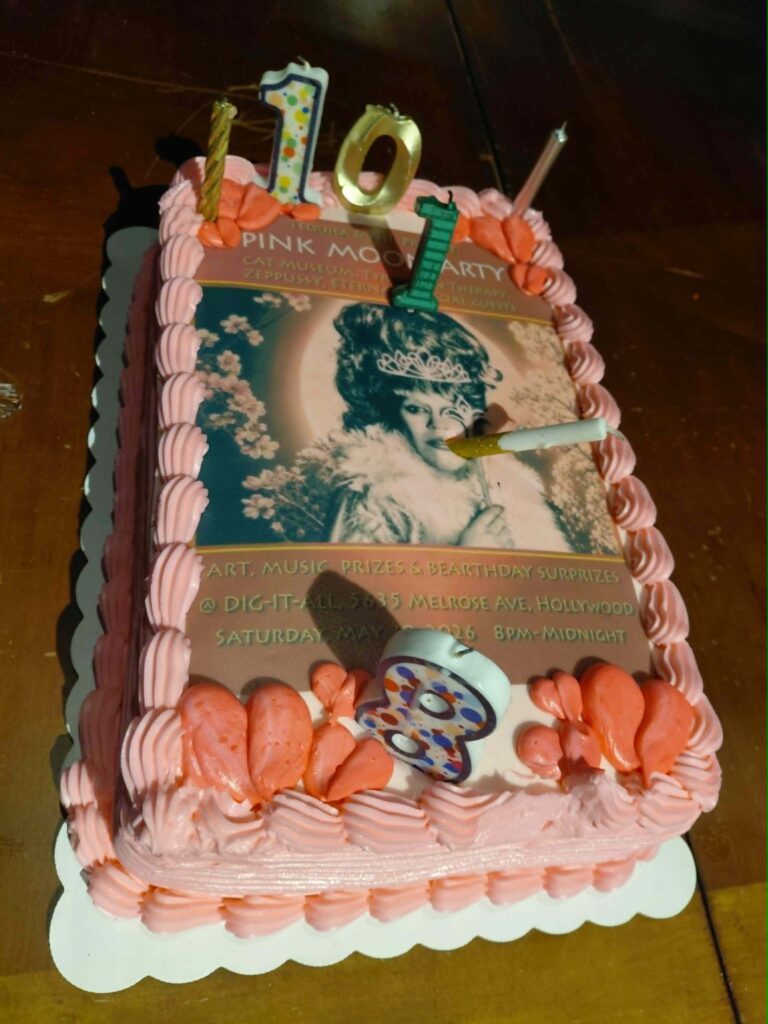
Meanwhile, preparations continue for what promises to be a very busy year in Europe. The upcoming exhibitions in Vienna, Berlin, Amsterdam, and Germany are bringing together artists, musicians, archivists, and troublemakers from around the world. It’s exciting to see how punk culture continues to evolve while still carrying the DNA of those first chaotic years.
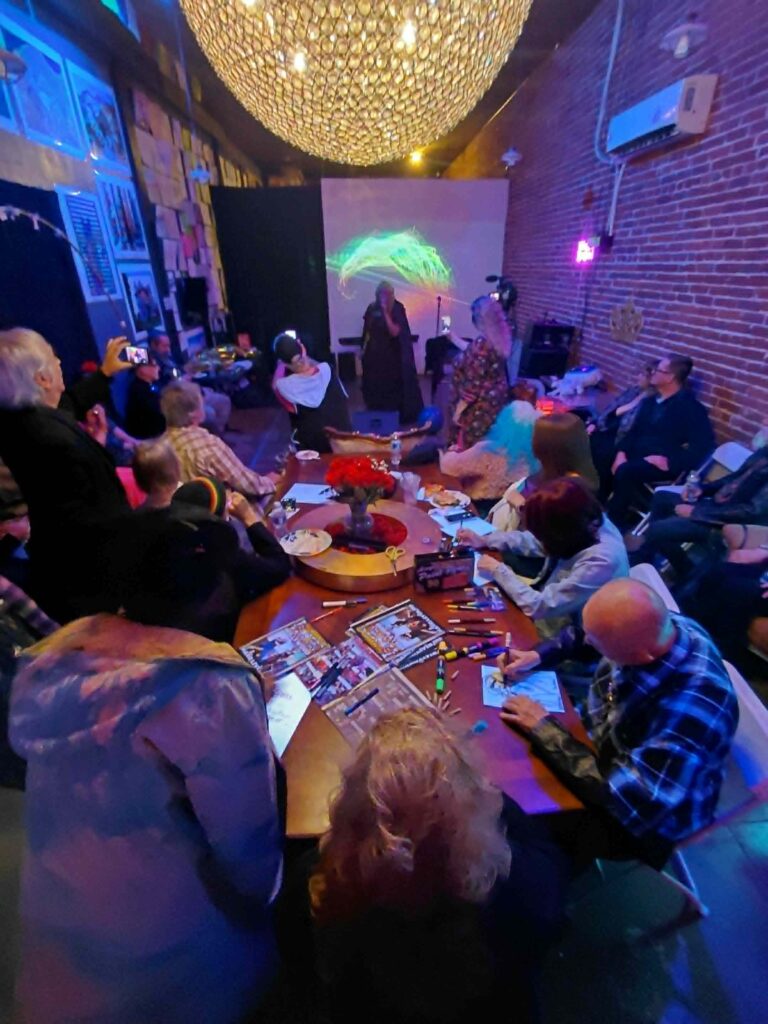
One thing that never ceases to amaze me is how international punk has become. When I first got involved, most people thought of punk as a local scene. Today, I can have conversations with artists from Berlin, Vienna, Mexico City, Tokyo, London, and Los Angeles all in the same day. Different languages. Different cultures. Same spirit.
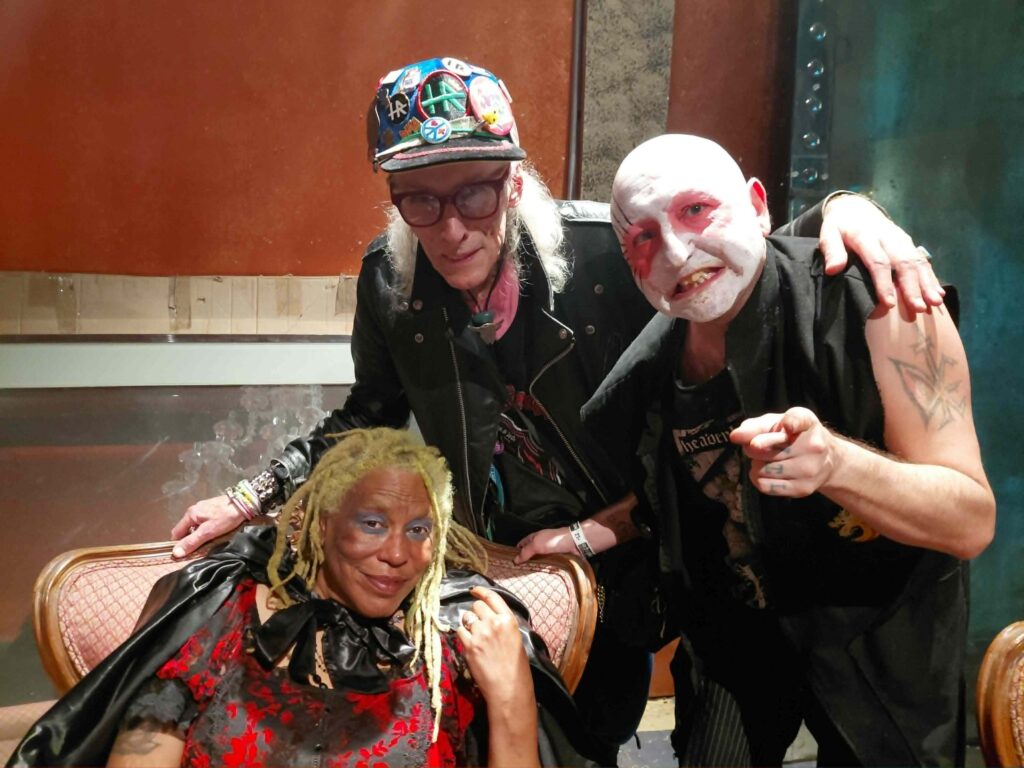
I’ve also continued my work with university archives and researchers documenting punk history. For years, people dismissed punk as something temporary. Now universities are collecting flyers, fanzines, photographs, video footage, and oral histories. The kids who were once told they would never amount to anything have become subjects of academic study. There is something wonderfully punk about that.
Music remains at the center of everything. Whether it’s revisiting the work of Kurt Weill, celebrating the Ramones, talking about Nina Hagen, or discovering new bands carrying the torch, the soundtrack never stops. Punk has always been more than a genre. It’s a conversation that stretches across generations.
And then there’s Tequila TV, which somehow continues after all these years. Public access television taught me an important lesson: don’t wait for permission. If nobody gives you a platform, build your own. That lesson still applies today whether you’re making television, publishing a zine, starting a podcast, or opening a museum.
What I’ve learned after decades in punk rock is that survival itself is a creative act. Every flyer saved, every story recorded, every young artist encouraged, every old friend remembered adds another thread to a history that was never supposed to last.
Yet here we are.
Almost fifty years after the first punk explosion, the culture is still growing, still arguing, still reinventing itself, and still finding new people who need it.
LEMMY WAS RIGHT: THE BEST EXHIBIT IN THE MUSEUM IS THE GIFT SHOP
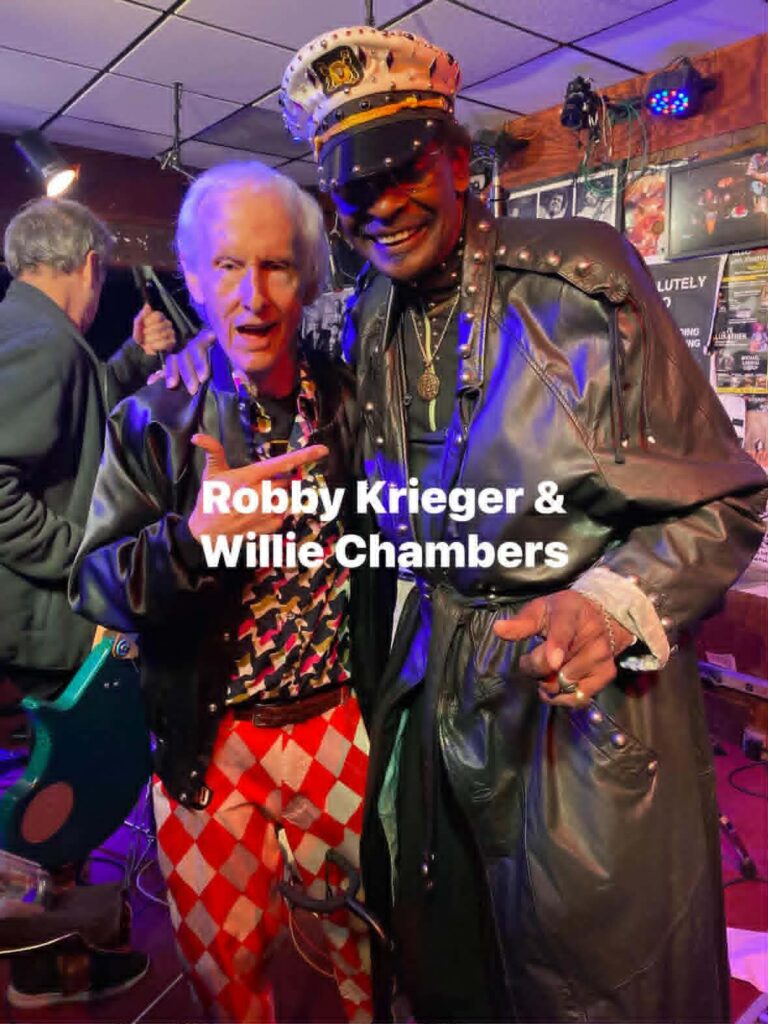
Lemmy always told me the best exhibit in any museum is the gift shop.
So naturally, the first place I went when I walked into “Outsiders, Outcasts, Rebels + Weirdos: Punk Culture 1976–86” at the Skirball was the gift shop.
The funny thing about punk is that nobody ever expected it to end up in a museum. We were the flowers in the dustbin. We were the kids they said wouldn’t amount to anything. We were making flyers, stapling posters to telephone poles, sleeping on floors, starting bands with three chords and a bad attitude.
Now there are museum exhibitsAnd honestly? I thought it was a good show.
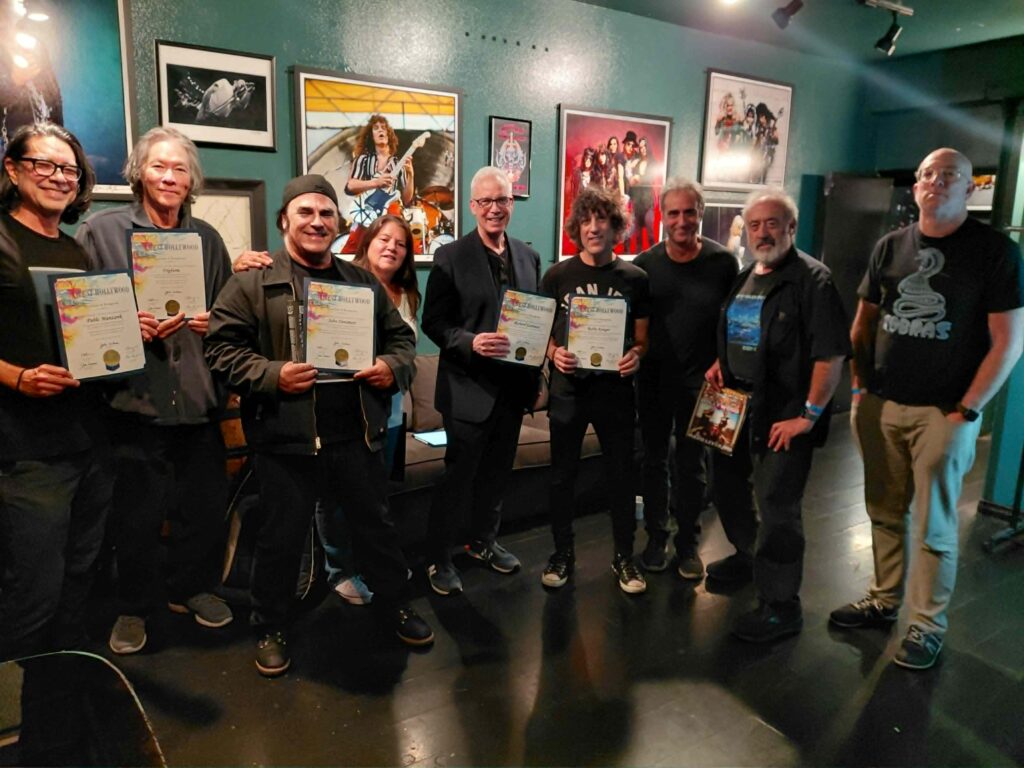
What struck me most wasn’t what was hanging on the walls. It was the people walking through the doors. The average age seemed to be around sixty. Veterans returning to the battlefield. Survivors checking in on their own history. But there was also a steady stream of younger visitors wandering through, trying to understand what all the noise was about.
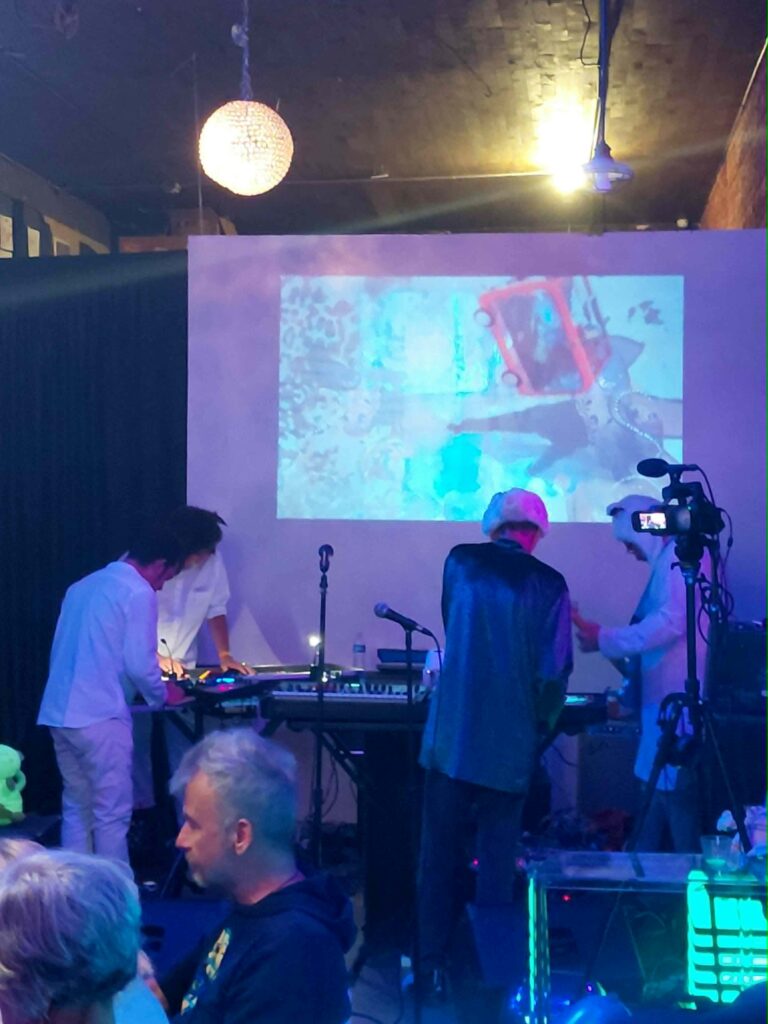
Punk is popping out of the ground like weeds all over the world. The seeds got scattered decades ago and now they’re growing everywhere.
The Skirball is about as sterile a location as you can imagine for a movement that thrived in filthy clubs, abandoned warehouses, rehearsal spaces, and somebody’s living room. Yet somehow it works. Maybe because punk was never really about the location. Punk was about the people.
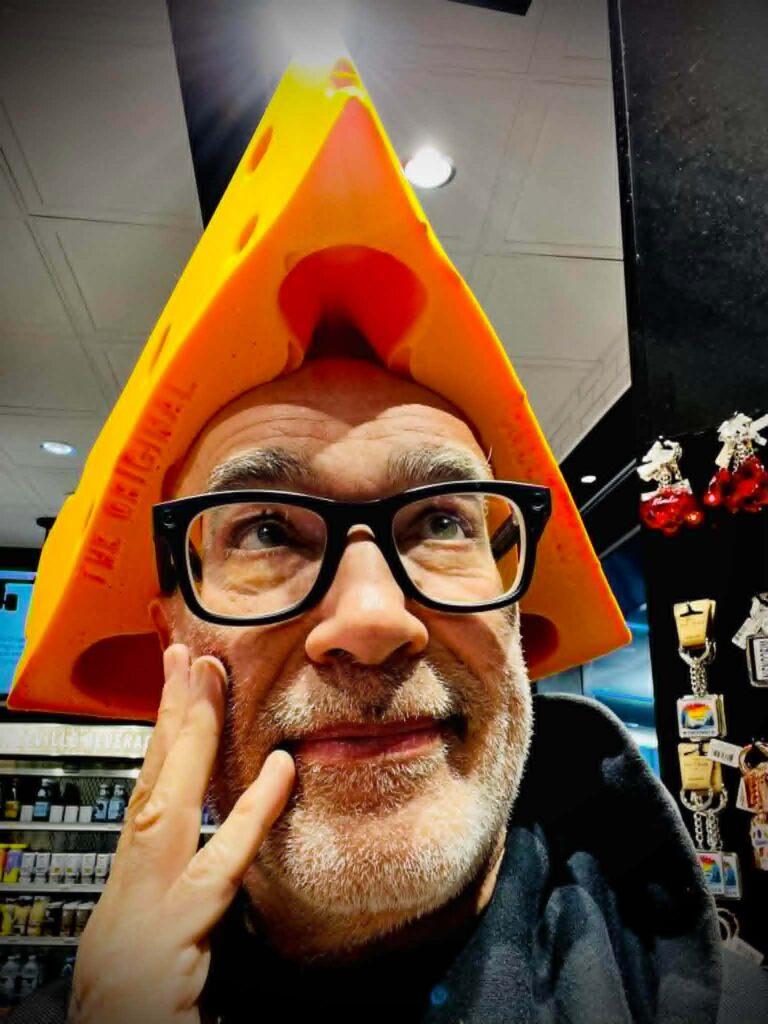
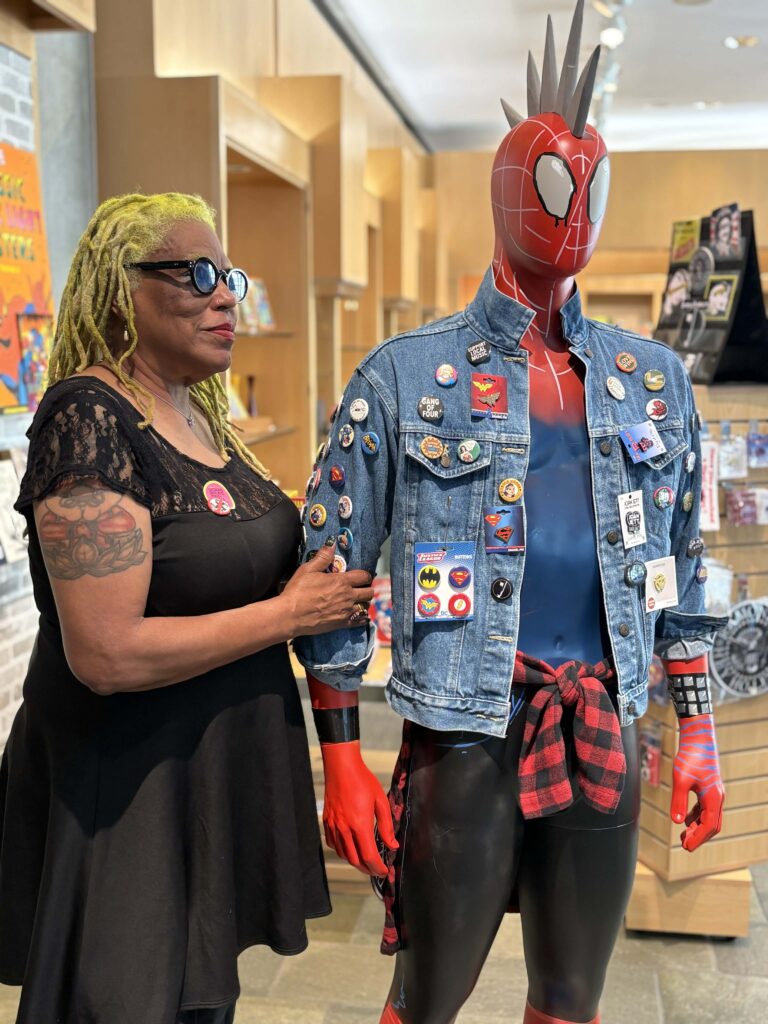
The gift shop was packed. I was told they can’t keep punk buttons in stock. The staff members were wearing them. That alone made me smile. The revolution may have been commercialized, but at least people are still wearing the uniform.

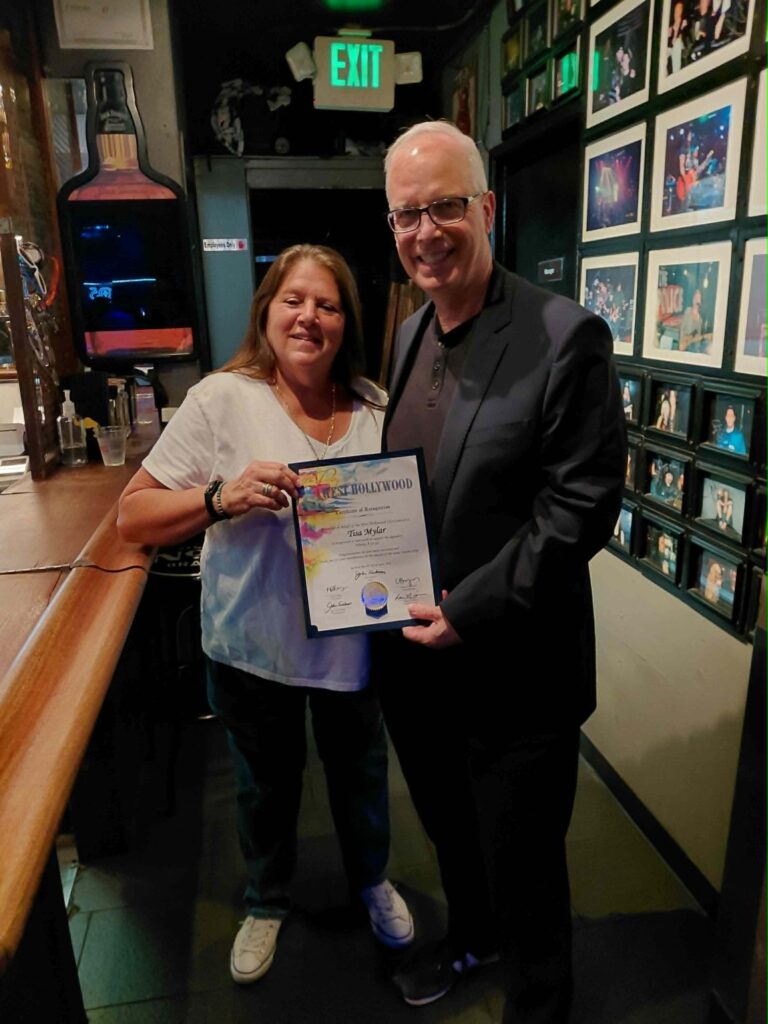
One of the highlights was meeting the manager of the gift shop, a leather smith from Los Angeles. Good people. The kind of people punk has always attracted. Creative people. Makers. Outsiders. The folks who build culture instead of consuming it.
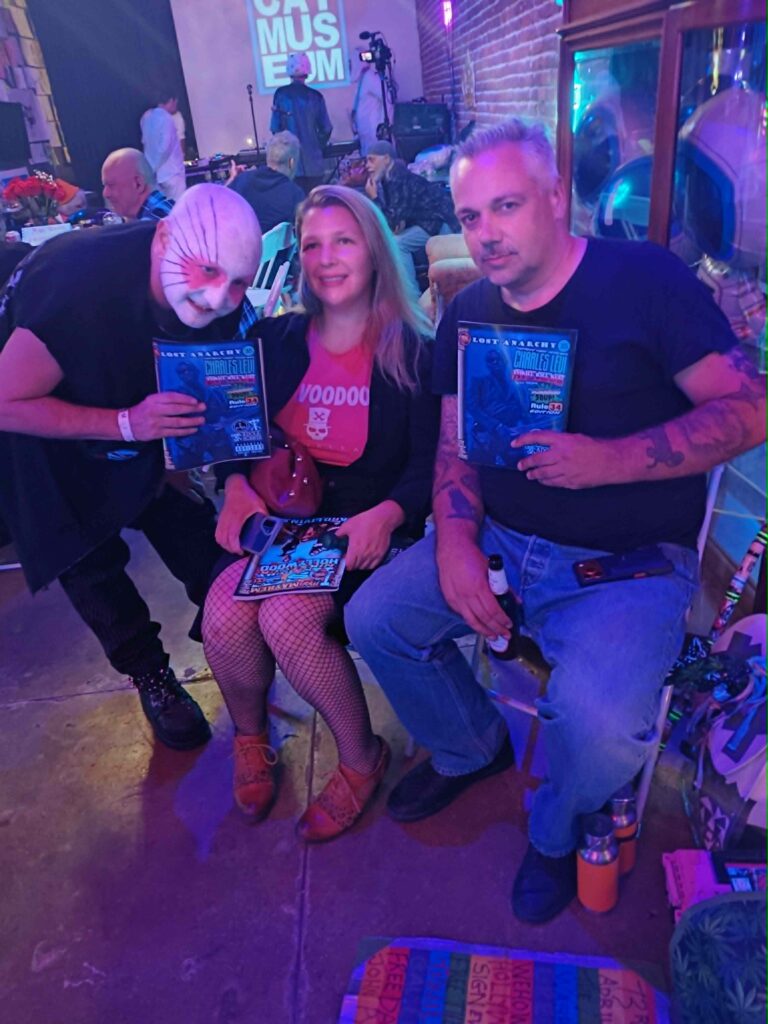
The exhibition itself was assembled by curator Cate Thurston and guest curator Michael Worthington, who clearly understand that punk wasn’t just a sound. It was a community. A network of outsiders finding each other.
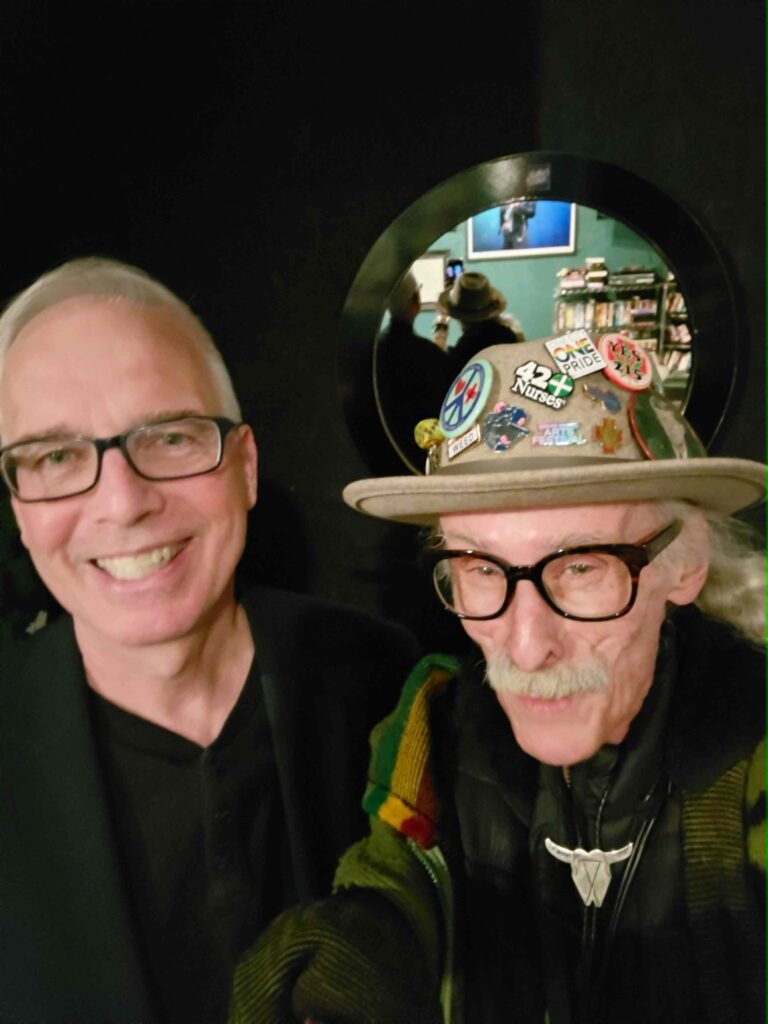
Walking through the galleries, I couldn’t help thinking about all the people who aren’t here anymore. The musicians, artists, promoters, photographers, zinesters, club owners, and weird kids who made this thing happen. They probably never imagined their homemade flyers and battered jackets would someday be displayed behind museum glass.
Yoko Ono’s Los Angeles Dreamscape
The first thing visitors encounter at Yoko Ono: Music of the Mind is an enormous portrait of the artist herself. She sits cross-legged in a sparse room, calm and centered, as though waiting for us to catch up. It is the perfect introduction to an exhibition that is less about looking at art and more about participating in it.
I attended the pre-opening in Los Angeles and found myself immersed in a world where art refuses to stay quietly on the wall. Visitors danced beneath flowing black fabric suspended in bright white space. Others scribbled messages, drawings, poems, and dreams on walls and ceilings, reaching as high as their arms would allow. One room has become a vast ocean of blue ink, layer upon layer of human expression accumulating over time.
Standing inside that room feels less like viewing an artwork and more like standing inside the collective consciousness of Los Angeles. Names overlap drawings. Hearts sit beside political statements. Simple sketches coexist with elaborate illustrations. Thousands of individual voices become one giant conversation. The room itself becomes the artwork.
Nearby, German helmets hang overhead like strange parachutes filled with puzzle pieces. Visitors are invited to take one home, carrying away a fragment of a larger whole. It is a simple gesture, yet profoundly moving. We leave with a piece of the puzzle and a reminder that none of us ever sees the complete picture.
The exhibition includes one of Ono’s most famous works, Cut Piece, the legendary performance in which audience members were invited to cut away portions of her clothing while she remained seated and silent. Decades later, the work still confronts viewers with uncomfortable questions about power, vulnerability, consent, and human behavior. There is also a shattered window marked by what appears to be a bullet hole. The image strikes the heart immediately. Ono has always understood how a small visual gesture can open an enormous emotional space.
I had the privilege of seeing Yoko Ono’s work in London last year, and this Los Angeles presentation only deepened my admiration. There appears to be no limit to the territory her imagination is willing to explore. Long before I understood Fluxus or conceptual art, Yoko Ono was one of the first avant-garde artists I followed. She represented a world where art could be an idea rather than an object.
Which brings me to the Beatles. History has not always been kind to Yoko Ono. For decades she was blamed for breaking up the world’s most famous band. Yet standing among these works, that narrative feels increasingly absurd.
I remember hearing stories of the Beatles in Hamburg, singing in German, wearing leather jackets, and playing marathon club sets before the machinery of superstardom took hold. Their original spirit was experimentation, rebellion, curiosity, and artistic risk. Yoko Ono did not destroy that spirit. She embodied it.
The Beatles were always going to evolve. Every great partnership eventually changes form. What matters is that the creativity continued. John Lennon continued. Paul McCartney continued. George Harrison continued. Ringo Starr continued. The music survived. The art survived.