There is something deeply backwards about a country that prides itself on being a cultural powerhouse making it increasingly difficult for international musicians to perform on its stages. For heavy metal fans, this is becoming painfully familiar.
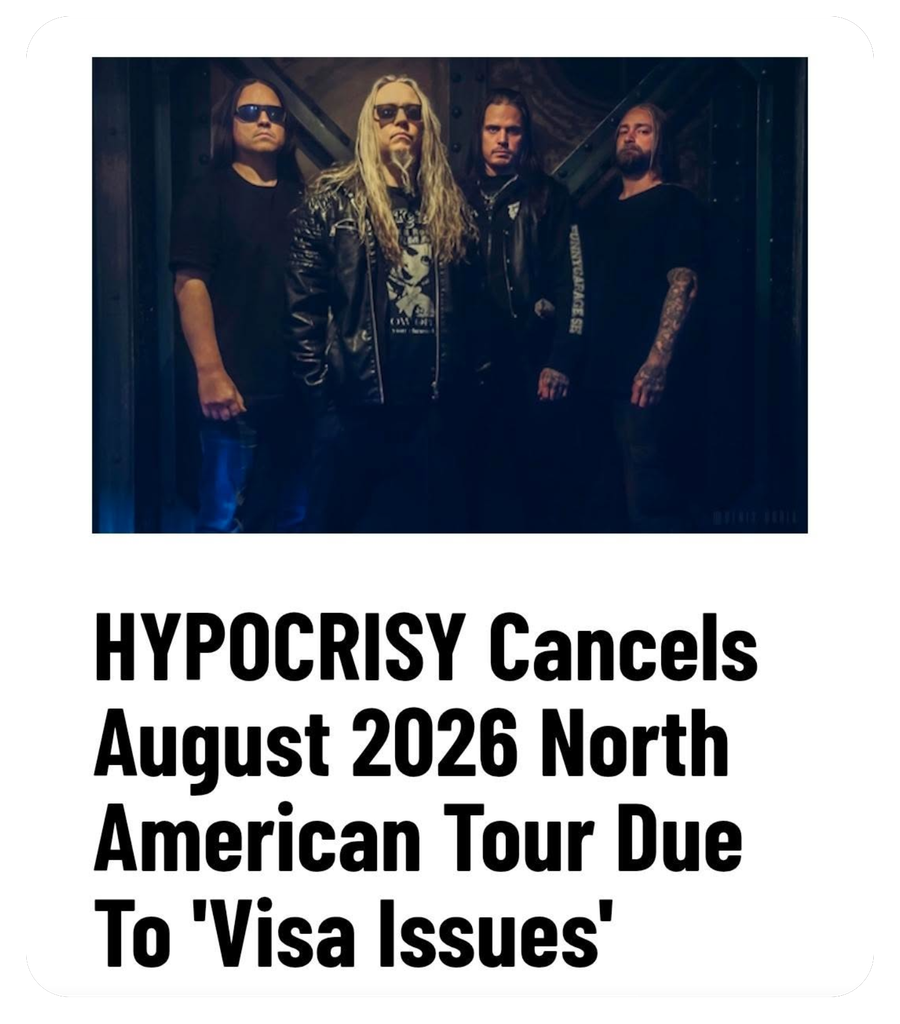
In August 2026, Swedish death-metal veterans Hypocricy were forced to cancel their entire North American tour because of visa problems. The tour was supposed to run from Toronto through the United States and end in Los Angeles. The band apologized to fans, saying the visa problems were beyond their control and that they had done everything they could. This was not some unknown garage band trying to sneak into America for a weekend. Hypocrisy has been a major name in extreme metal since the early 1990s, and this wasn’t even their first experience with U.S. visa trouble. The band previously canceled U.S. dates in 2009 because of work-visa delays. Hypocrisy is hardly alone in this issue, however.
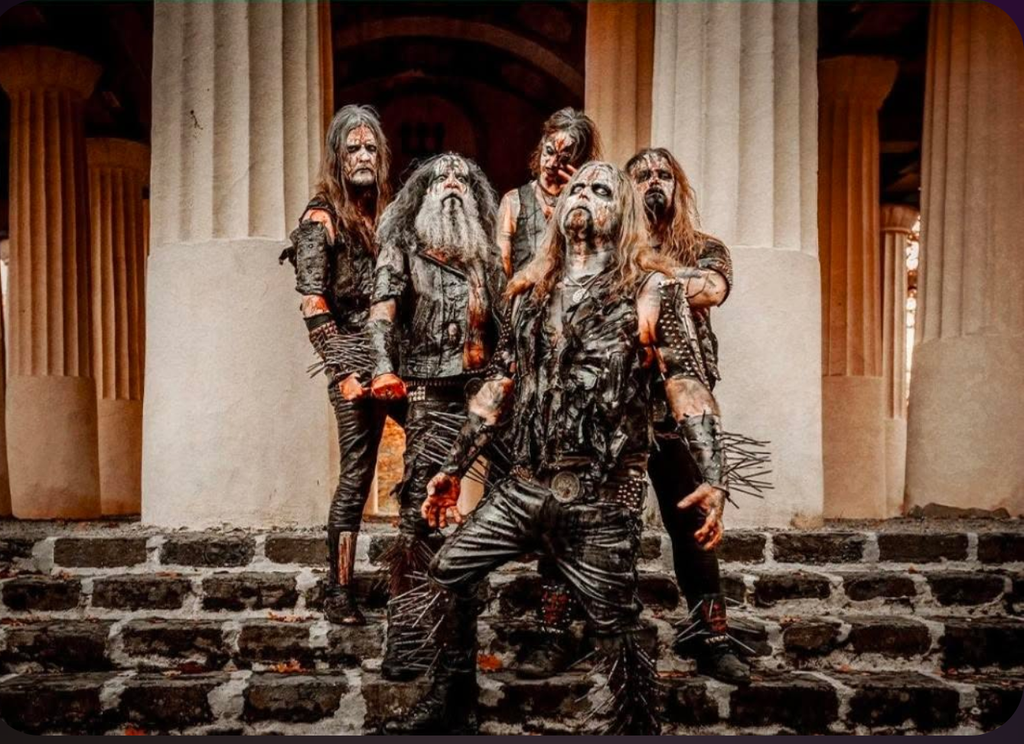
In 2022, Swedish black-metal band Watain was forced to withdraw from a North American tour with Mayhem and Midnight after the U.S. Embassy placed its visa applications into an additional, undisclosed “administrative process.” The band had previously toured the United States eight times using approved working visas. This time, however, there was no clear explanation and no guarantee the investigation would finish before the tour ended. The fact that a band can do everything right and still lose is simply maddening.
International musicians generally cannot simply arrive under a tourist or visa-waiver authorization and perform professionally. Established groups commonly require a P-1B petition, and the process can involve contracts, detailed itineraries, labor consultation, evidence of international recognition, press coverage, performance history and documentation for individual members. USCIS describes the P-1B process as requiring substantial evidence that the group is internationally recognized and has been established and performing together for at least a year. If a band has had recent member changes, this becomes even more of a hurdle.
Recent reporting indicates that artist petitions can take many months, with some P-visa processing reportedly reaching roughly eleven and a half months. Application costs have also risen dramatically. The result is a system in which an international band can spend thousands of dollars, months of preparation and enormous amounts of administrative effort, only to face delays and uncertainty after the petition has been approved. For independent metal bands, that can be devastating.
A tour is not just four musicians getting on an airplane. Promoters book venues. Tickets are sold. Merchandise is manufactured. Flights and hotels are purchased. Trucks and crew are scheduled. Support bands are booked. Fans make travel plans. Every day of delay costs money. What even is the gain of denying these bands last minute? Is it a power move? Does the US really think they don’t desperately need a lesson in European culture? The United States also looks increasingly out of step when compared with touring in much of Europe. That doesn’t mean European touring is completely bureaucracy free because American bands absolutely can encounter work-permit, tax, customs and immigration requirements, particularly after Brexit. Nonetheless, many European countries have established visa and work-permit free routes for short-term touring musicians. The British government, for example, says 20 EU countries confirmed such routes for British performers, while other European countries maintain their own simplified arrangements.
Overall, an American metal band can have paperwork to deal with in Europe. But the experience is not necessarily equivalent to navigating the U.S. artist-visa system, particularly for short tours. This isn’t just a small inconvenience for the European bands to play in the US because America always needs culture. Heavy metal, punk, goth, industrial, classical music, electronic music and countless other scenes have always depended on international exchange. A Swedish death metal band brings Swedish metal culture to American fans. A Brazilian band brings Brazilian influences. A Japanese band brings something that American audiences may never otherwise encounter. Global unification is the point. When legitimate artists start deciding that America is too expensive, too unpredictable or too difficult to tour, the country doesn’t become safer or stronger. It becomes exponentially weak, and biased. This has to change yesterday.
Watain may eventually return, and Hypocrisy may reschedule. Other bands will undoubtedly find ways through the system, but many great bands that were touring in 2018, have turned their backs on touring the US because it has become such a royal pain in the ass. The irony that America is the melting pot of different cultures, but won’t simplify the process of bringing over great bands from other countries, is uncanny. These are talented visitors bringing us entertainment that we so desperately need. If Aliens from another planet wanted to play a show here, they should be allowed as well. Let them pass! Let global unification exist!